
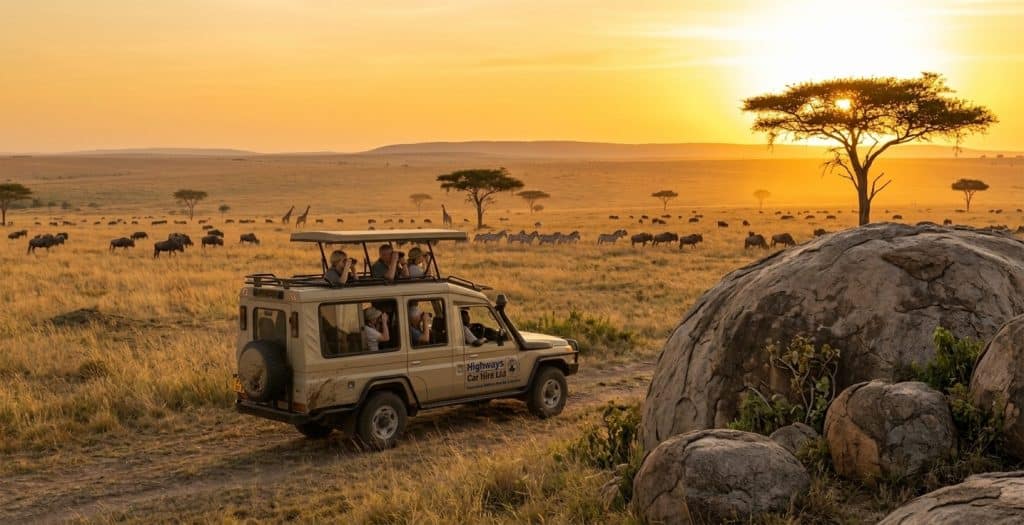
Serengeti National Park: Complete Safari Guide
If there’s one park that comes to mind when people picture an African safari, it’s the Serengeti. A Serengeti National Park safari is the centerpiece of most northern circuit itineraries, and for good reason — nowhere else in Tanzania do you get this much space, this much wildlife, and this much sky. We’ve been running trips into the Serengeti for two decades, and it still doesn’t get old watching first-time guests go quiet the moment the plains open up in front of them.
This guide walks you through what the Serengeti actually offers, when to visit, where to base yourself, and how to build it into a private, tailor-made itinerary that fits how you actually want to travel.
What Makes the Serengeti Different
The Serengeti isn’t just big — at roughly 14,750 square kilometers, it’s genuinely hard to grasp until you’re in it. Unlike parks with dense bush or forest, much of the Serengeti is open grassland, which means visibility is excellent and predator sightings happen often. Lions here don’t hide; you’ll frequently find them lounging on kopjes or stretched out in the shade of an acacia in full view of the track.
The park is also home to the Big Five, over 500 recorded bird species, and — most famously — the annual movement of roughly 1.5 million wildebeest alongside hundreds of thousands of zebra and gazelle. That movement, commonly called the Great Migration, shapes when and where you’ll want to base your Serengeti National Park safari.
Best Time to Visit the Serengeti
Timing matters more here than in almost any other Tanzania park, because the wildlife (and the migration in particular) moves seasonally.
- January–March: Herds are concentrated on the southern plains for calving season. Dramatic predator action, dense wildlife concentrations, and fewer crowds than peak months.
- April–May: The long rains. Quieter, greener, and excellent for photography, though some roads can be muddy.
- June–July: Herds push north through the central and western corridor. A great time for game drives with manageable crowd levels.
- August–October: The famous Mara River crossings happen in the northern Serengeti. This is peak season — book well ahead.
- November–December: Short rains bring the herds back south. Good value season with strong wildlife viewing.
If your main goal is the migration specifically, we’d point you to our guide to the Great Migration to help you match the right month to the right region of the park.
Where to Stay in the Serengeti
The Serengeti is large enough that “where you stay” really means “which part of the park you experience.” We generally group it into four areas:
- Seronera (Central Serengeti): Reliable year-round game viewing, good access, ideal for shorter stays.
- Southern Serengeti (Ndutu area): Best for calving season, January to March.
- Western Corridor: Quieter, with the Grumeti River crossings in June.
- Northern Serengeti (Kogatende/Mara River): The place to be for the July–October river crossings.
Because every Highways Serengeti National Park safari is private and tailor-made, we place you in the region that matches your travel dates rather than a fixed package — there’s no reason to be in the south during peak northern crossing season, or vice versa.
What a Day on a Serengeti National Park Safari Looks Like
Mornings typically start early, before sunrise, when predators are most active and the light is best for photography. You’ll head out in a private vehicle with your guide, stop for sightings as long as you like (no shared vehicle means no compromise on pace), and return to camp for brunch. Afternoons often bring a second game drive, sometimes combined with a picnic lunch out on the plains. Many camps also offer optional hot air balloon safaris, which run only in the early morning — a genuinely unforgettable way to see the scale of the park from above before the day’s heat sets in.
Combining the Serengeti With the Rest of the Northern Circuit
Very few guests visit the Serengeti in isolation. It pairs naturally with the Ngorongoro Crater, Tarangire, and Lake Manyara as part of a broader northern circuit itinerary. If you’re mapping out how many days to allocate where, our step-by-step safari planning guide is a good starting point, and our 7-day Tanzania safari itinerary shows how the Serengeti typically fits alongside the crater and Tarangire.
Entry into the park is managed by the Tanzania National Parks Authority (TANAPA); you can review current park regulations and conservation information directly on the official TANAPA website.
Planning Your Own Serengeti Safari
Every Serengeti National Park safari we build is private and tailored to the traveler — never a shared group itinerary, and never budget-tier. If you’re ready to talk through dates, regions of the park, and accommodation style, get in touch with our team and we’ll help you build an itinerary around when you want to travel and what you want to see.
Key Takeaways
- The Serengeti is Tanzania’s largest and most famous park, known for open plains, predator sightings, and the Great Migration.
- Timing your visit to a specific region of the park (south, west, or north) matters more than picking a single “best month.”
- The park splits into four main areas — Seronera, the south, the western corridor, and the north — each suited to different times of year.
- A private safari means your itinerary can be built around the migration’s actual location, not a fixed departure schedule.
- The Serengeti pairs naturally with Ngorongoro, Tarangire, and Lake Manyara on a northern circuit itinerary.
Frequently Asked Questions
- How many days should I spend in the Serengeti National Park? Most travelers spend 2–4 nights in the Serengeti, depending on how many other parks are included in the itinerary. If witnessing a Mara River crossing is a priority, we’d recommend at least 3 nights in the northern Serengeti to allow for return visits to the river.
- What is the best month to see the wildebeest migration in the Serengeti? It depends what you want to see — calving season peaks in February in the south, while the dramatic Mara River crossings happen between July and October in the north. There isn’t one single “best month” for the whole migration, only the best month for the part of it you want to witness.
- Is the Serengeti good for a first-time safari? Yes, it’s one of the best parks in Tanzania for first-time visitors thanks to its wildlife density and open terrain, which makes sightings easier. Most first-time travelers combine it with Ngorongoro Crater for a well-rounded introduction to the northern circuit.
- Do I need to fly into the Serengeti, or can I drive? Both options exist. Driving from Arusha typically takes 6–8 hours depending on the route and stops, while scheduled flights from Arusha or the Serengeti’s own airstrips take under an hour — we help clients weigh the trade-off between cost, time, and scenery when planning.
- Is the Serengeti safe to visit? Yes. Guests travel with an experienced private guide at all times, vehicles stay on designated tracks, and camps operate with established safety protocols for wildlife encounters. Tens of thousands of visitors safely experience the park every year.