
Best Time to Go on Safari in Tanzania
There’s no single “best” month to safari in Tanzania — there’s a best month for what you want. Someone chasing the Mara River crossings needs different dates than someone who wants newborn wildebeest calves, and both need different dates than someone just trying to avoid a crowded vehicle at every sighting.
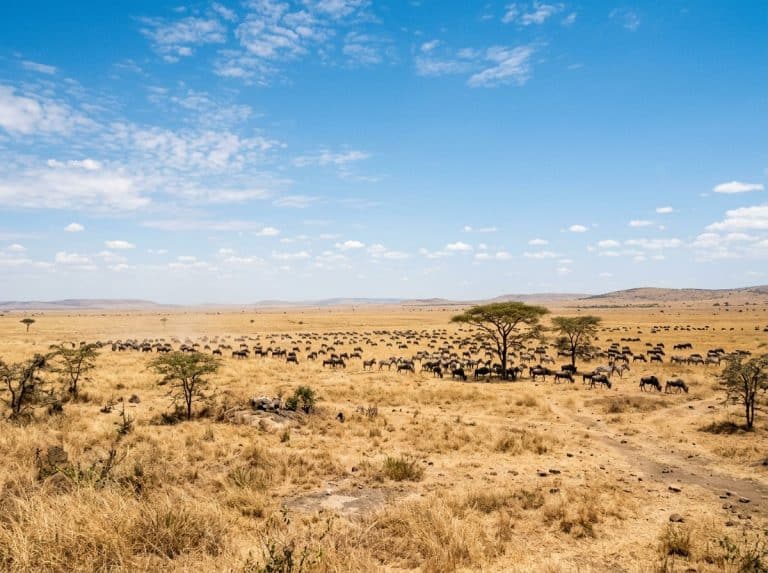
The short version: June through October is Tanzania’s dry season, and it’s the most reliable stretch for game viewing. According to Tanzania National Parks (TANAPA), the dry season from June to October generally offers easier wildlife viewing around water sources. The wildebeest migration reaches the northern Serengeti and crossing activity into Kenya typically occurs around July to September.
Here’s how to actually use that information to pick your dates.
Dry Season (June–October): The Classic Safari Window
This is peak season for a reason. Rain is rare, vegetation thins out, and animals cluster around rivers and waterholes — which makes them dramatically easier to spot. It’s also cooler and drier, with far fewer mosquitoes.
- June: Rains have just ended, landscapes are turning gold, migration herds are moving through the western corridor. Slightly less crowded than peak months.
- July–September: The classic “best time” window. The Great Migration reaches the northern Serengeti, and the Mara River crossings — the single most dramatic wildlife event in East Africa — typically happen in this stretch. Parks are at their busiest, and lodges book out months in advance.
- October: Still dry and excellent for game viewing, but noticeably quieter than August. A good pick if you want dry-season conditions without the peak-season crowds.
Trade-off: this is also when prices peak and popular camps sell out fastest, so book your Serengeti or Ngorongoro safari well in advance if you’re set on these months.
Green Season (November–May): Fewer Crowds, Lower Prices
The green season isn’t the compromise choice people assume it is — it’s simply a different kind of safari. Short afternoon storms (rather than all-day rain, most of the time) leave mornings clear for game drives, and the landscape turns a vivid green that photographs beautifully.
- November–December: Short rains freshen up the landscape. Wildebeest herds move back toward the southern Serengeti. Good value, moderate crowds.
- January–February: A relatively dry period within the green season and prime time for the Serengeti’s calving season. Large numbers of wildebeest calves are born across the southern plains, attracting predators and creating some of the most dramatic wildlife viewing of the year.
- March–May: The long rains, and the quietest, cheapest months to travel. April and May see the heaviest rainfall and some camps close temporarily, so this is the one stretch we’d steer most first-time travelers away from — though it can suit a flexible, budget-conscious return visitor.
Matching the Season to What You Actually Want to See
- Want the Mara River crossings? Aim for July–September, and expect to share the riverbank with other vehicles.
- Want newborn wildebeest calves and predator action? January–February in the southern Serengeti.
- Want fewer people and lower rates, without giving up good wildlife viewing? June or November are the sweet spots — dry-season-adjacent without peak-season pricing or crowds.
- Planning a Zanzibar beach extension too? Zanzibar’s rainy season roughly mirrors the mainland’s, so the same June–October / December–February windows work well for both legs of the trip.
Why "Best Time" Isn't the Same as "Only Good Time"
Tanzania’s northern circuit parks — Serengeti, Ngorongoro, Tarangire, Lake Manyara — are worth visiting nearly year-round, which is part of why Tanzania is different from safari destinations with a narrow viable window. Ngorongoro Crater in particular holds a dense, resident wildlife population that doesn’t migrate, so it delivers strong game viewing in any season. The real question isn’t “when is Tanzania good,” it’s “which specific experience do you want,” and that’s what should set your dates — not a generic “best time” list.
If you’re not sure which window fits your priorities and travel dates, our team can put together a custom itinerary built around exactly what you want to see.
Key Takeaways
- Dry season (June–October) is best for reliable game viewing and the Mara River crossings, but comes with peak prices and crowds.
- Green season (November–May) is quieter and cheaper, with a short dry window in January–February that lines up with calving season.
- The Mara River crossings typically happen between July and September, in the northern Serengeti.
- Calving season (January–February) draws predators to the southern Serengeti plains and offers dramatic, less-crowded game viewing.
- April–May are the wettest months and the ones we’d most likely steer a first-time visitor away from.
- Ngorongoro Crater’s resident wildlife makes it a strong choice in any season.
Frequently Asked Questions
1.) Is dry season really necessary for a good Tanzania safari? No — it’s the most reliable window for concentrated game viewing, but green season safaris still deliver excellent sightings, especially around calving season in January and February.
2.) When exactly do the Mara River crossings happen? They’re weather-dependent and never guaranteed on exact dates, but they most commonly occur between July and September as the migration herds move through the northern Serengeti.
3.) Is it worth visiting Tanzania during the rainy season? For the right traveler, yes — lower prices, fewer crowds, and lush green scenery make November–December and January–February worthwhile, though April–May’s heavy rains are harder to recommend.
4.) Does the “best time to visit” change if I’m also going to Zanzibar? Not much — Zanzibar’s dry and wet seasons closely track the mainland’s, so the same months that work well for a safari generally work well for a beach extension too.
5.) How far in advance should I book if I want July–September dates? As early as possible — six to twelve months ahead is common, since the best camps in the Serengeti and Ngorongoro sell out for peak migration season well before it arrives.