
How Much Does a Tanzania Safari Cost?
“Just give me a number.” That’s what most people want when they start planning a Tanzania safari — and it’s the one thing every travel blog seems to dance around. You’ll find pages of caveats about “it depends” before anyone commits to an actual figure.
So here’s the honest version. A private, mid-range-to-luxury Tanzania safari typically runs $350 to $1,000+ per person, per day, all-inclusive of accommodation, meals, a private 4×4 vehicle, a professional guide, and park fees. A week-long trip through the northern circuit — Serengeti, Ngorongoro, Tarangire — usually lands somewhere between $3,000 and $7,000 per person, depending on the lodges you choose and when you travel.
That’s the headline number. The rest of this guide breaks down exactly where that money goes, so you’re not just trusting a figure — you understand it.
What Actually Drives the Cost of a Tanzania Safari
Four things determine your final price tag, and they matter roughly in this order:
- Accommodation tier — this is the single biggest swing factor. A comfortable tented lodge and an ultra-luxury fly-in camp can be twice or three times the price for the same number of nights.
- National park and conservation fees — these are fixed by the Tanzania National Parks Authority (TANAPA) and apply no matter who you book with. Serengeti and Ngorongoro fees typically run $70–$83 per person per day, and they’re non-negotiable.
- Season — traveling during the green season (roughly November through May, excluding the short rains) can bring accommodation rates down 20–40% compared to peak migration months (June–October).
- Trip length and route — more parks and more driving days between them add up. A 5-day Serengeti-and-Ngorongoro loop costs less overall than a 10-day trip that also covers Tarangire, Lake Manyara, and Zanzibar.
Group size barely moves the needle once you’re booking a private safari — you’re paying for your own vehicle and guide either way, which is part of why the experience feels so different from a shared group tour.
Typical Daily Rates by Safari Level
| Safari Level | Per Person, Per Day | What You Get |
|---|---|---|
| Mid-range | $350–$500 | Comfortable tented camps or lodges, private vehicle, full board, experienced guide |
| Premium | $500–$700 | Higher-end lodges, better locations inside or bordering the parks, more personalized service |
| Luxury | $700–$1,000+ | Top-tier camps and lodges, prime wildlife locations, exceptional food and service, sometimes fly-in options |
For reference, that means a 7-day mid-range private safari across the northern circuit generally totals $3,000–$4,500 per person, before flights. A luxury version of the same route can run $6,000–$8,000+. If a week feels like too much, our 5-day itineraries cover Serengeti and Ngorongoro at a lower total cost.
What's Included — and What Isn't
A well-built safari quote should already fold in most of your daily expenses. Here’s what’s typically covered:
- Accommodation (lodge or tented camp)
- All meals during the safari
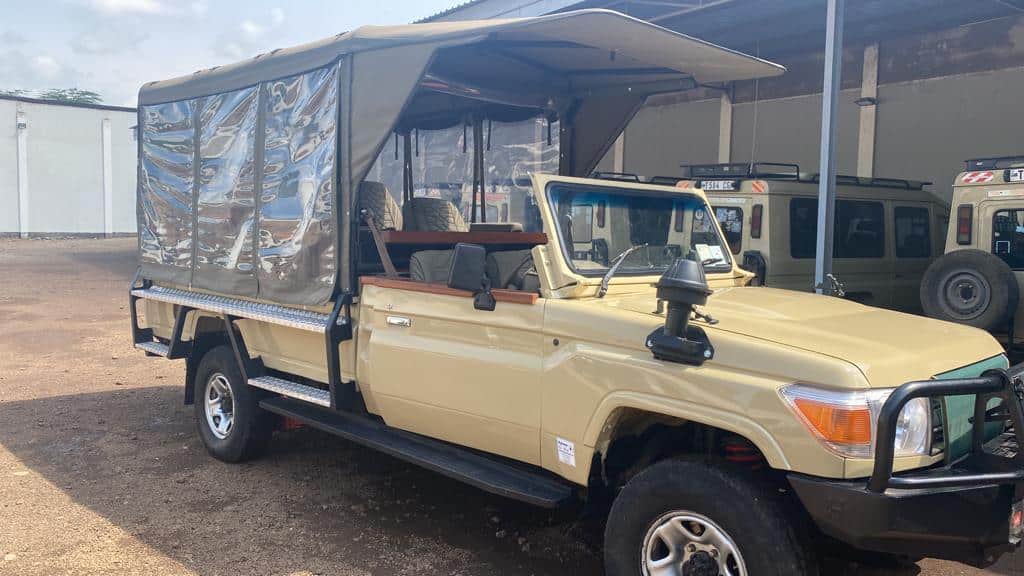
- Private 4×4 safari vehicle with pop-up roof
- A dedicated, professional guide for the full trip
- National park entrance and conservation fees
- Ground transportation between parks
What’s usually not included, and worth budgeting separately for:
- International flights to and from Tanzania
- Tanzania visa fees (around $50–$100 for most nationalities)
- Travel insurance
- Tips for your guide and lodge staff (a common range is $20–$30 per day for the guide alone)
- Alcoholic drinks and personal purchases
If a quote you’ve received looks suspiciously cheap, this is usually where the difference hides — either the park fees aren’t fully covered, or the “guide” is shared across a group vehicle you didn’t know you were joining.
Why Prices Vary So Much Between Operators
Two safaris covering the exact same parks, on the exact same dates, can differ by hundreds of dollars per day. The reason usually comes down to three things: who owns the vehicle and lodges (versus subcontracting), how experienced the guide is, and whether you’re booking directly with a Tanzania-based operator or through a foreign agency that adds a markup before it ever reaches the ground operator. Booking with a company that runs its own vehicles and has direct relationships with camps tends to close that gap — you’re paying for the safari, not for extra layers of resale.
How to Budget Realistically
A practical way to plan: decide on your comfort level first, then let trip length flex around your budget rather than the other way around. Five days is enough to cover Serengeti and Ngorongoro properly. Seven to ten days lets you add Tarangire, Lake Manyara, or a few days on Zanzibar without feeling rushed. Trying to squeeze too many parks into too few days is the most common budgeting mistake — you end up paying full daily rates for time spent driving rather than watching wildlife.
The easiest way to get an accurate number for your own trip is to request a custom itinerary and quote — our team, based in Arusha and running safaris for 20 years, can lay out exactly what a trip at your comfort level and dates would cost, with no hidden extras.
Key Takeaways
- A private, mid-range-to-luxury Tanzania safari costs roughly $350–$1,000+ per person, per day, all-inclusive of lodging, meals, guide, vehicle, and park fees.
- Park fees ($70–$83/day for Serengeti and Ngorongoro) are fixed by the government and identical across every operator.
- Green season travel (Nov–May, minus short rains) can cut accommodation costs by 20–40%.
- Flights, visas, tips, and alcohol are almost always extra, on top of the quoted daily rate.
- Price differences between operators usually come down to ownership of vehicles/lodges and how many resellers are in the chain, not the parks themselves.
Frequently Asked Questions
1.) Is $3,000 enough for a week-long Tanzania safari? For one person on a solid mid-range private safari, yes — that’s roughly the going rate for seven days covering Serengeti and Ngorongoro. It won’t stretch to luxury lodges or a Zanzibar extension without adding to that budget.
2.) Why do some Tanzania safari quotes seem much cheaper than others? Usually because they’re group/shared safaris rather than private ones, or because park fees and certain meals aren’t fully included. Always ask exactly what’s bundled before comparing two quotes side by side.
3.) Do national park fees really apply every single day? Yes — you pay conservation and entrance fees for each day you’re inside a park boundary, and these are set by the Tanzanian government regardless of which operator you book with.
4.) Is it worth paying more for a luxury safari over mid-range? It depends on what you value — luxury buys you better locations inside the parks (less driving to reach wildlife), higher-end service, and more privacy, but a well-run mid-range safari delivers excellent game viewing too.
5.) Does traveling in low season actually save meaningful money? Yes, particularly on accommodation — green season rates can drop 20–40% compared to peak months, and the parks are noticeably less crowded, though there’s more chance of rain.